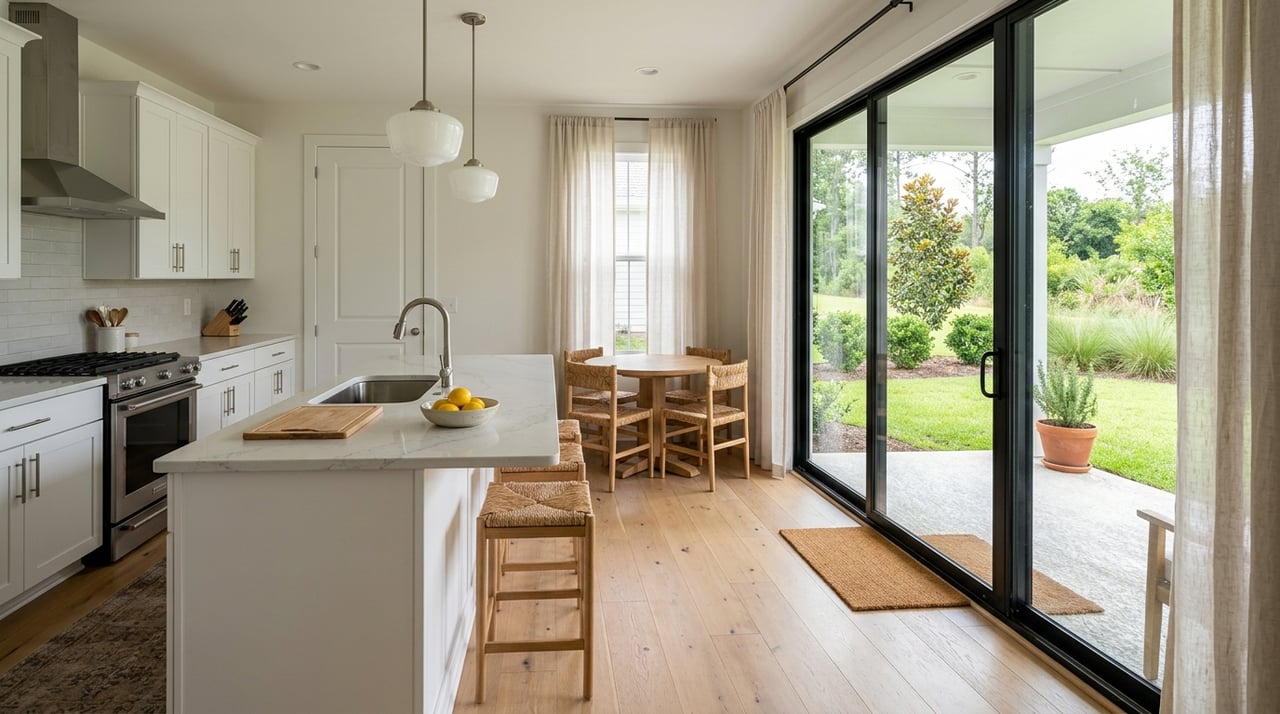
What Everyday Life In Northport Really Looks Like
April 2, 2026
April 2, 2026
If you are thinking about moving to Northport, you probably want more than a map and a list of homes. You want to know what daily life actually feels like, from the commute and errands to weekends, parks, and the overall pace. The good news is that Northport offers a clear mix of suburban ease, river-city character, and close access to Tuscaloosa. Let’s dive in.
Northport sits just across the Black Warrior River from Tuscaloosa, which gives you a different pace without putting you far from the area’s main job, dining, and entertainment hubs. The city has grown from 23,330 residents in 2010 to a 2024 Census estimate of 31,492, showing that more people are choosing the area for everyday living.
It is also a mostly residential community spread across nearly 15 square miles, according to Northport’s city history. In practical terms, that often means your day feels more neighborhood-based and low-rise than urban, with familiar routes and a little more breathing room.
For many buyers and relocators, that is the biggest lifestyle draw. You get a suburban setting while still being close enough to Tuscaloosa for work, appointments, and a night out.
One of the easiest ways to understand daily life in Northport is to look at commute patterns. The U.S. Census QuickFacts reports a mean travel time to work of 21.7 minutes, which supports the idea of a compact city with relatively manageable day-to-day driving.
Because Northport is directly across the river from Tuscaloosa, many routine trips are tied to a short cross-river drive instead of a long regional commute. If you work, study, or spend time in Tuscaloosa, that proximity can make a real difference in how convenient your week feels.
Within Northport itself, McFarland Boulevard acts as a major service and traffic corridor. The city points to McFarland Boulevard, downtown, and riverfront areas as important activity zones, which helps explain why everyday errands are likely to happen along a few familiar corridors rather than in one single destination.
Northport’s layout suggests a practical routine for daily life:
The city is also investing in connectivity. A 5th Street project is aimed at roundabouts, pedestrian accessibility, and a shared-use path linking downtown with Van de Graaff Park and Arboretum. That may not change every drive overnight, but it does show an effort to improve how people move through the city.
If you enjoy getting outside, Northport gives you several ways to build that into normal life instead of saving it for special occasions. Outdoor spaces are a noticeable part of the city’s identity, whether you want a paved walking trail, a shaded park, or a quick drive to a larger recreation area.
The city highlights Civitan Park, the Richard L. Platt Memorial Levee Trail, Lake Lurleen State Park, The Dells Golf Club, and River Run Park. That variety matters because it supports different routines, from a morning walk to youth sports, fishing, golf, or a relaxed weekend at the lake.
A few standouts shape the local lifestyle:
For many households, this means weekends can stay simple. You do not have to plan a major trip just to get outside for a few hours.
Every city has its own social calendar, and Northport’s tends to be shaped by recurring community events. That can make the year feel familiar in a good way, especially if you want a place where local traditions still show up on the calendar.
The city’s events page lists gatherings like Summer Kick Off and Touch a Truck, the West Alabama Food & Wine Festival, a Memorial Day Program, Dickens Downtown, and the Holiday Open House at City Hall. These are the kinds of events that help create a steady local rhythm across the year.
Instead of a lifestyle centered on dense city nightlife, Northport appears to lean into repeatable, community-based events. For many buyers, that translates into a place where the calendar feels approachable and rooted in local participation.
One reason Northport appeals to different types of buyers is that it is not built around just one housing style. The city has a historic core with older landmarks and downtown character, while other areas reflect newer suburban growth and subdivision development.
On the historic side, Historic Downtown Northport is described by the city as an early-19th-century district with art galleries, stores, museums, quaint restaurants, brick streets, ornate lighting, and the old wooden train trestle. The same page points to landmarks like the 1920 Kentuck Arts and Craft Center, the 1907 Northport Visitor Center and Heritage Museum house, the 1840s Shirley-Christian Home, and the Maxwell-Peters Home.
That older character gives part of Northport a more established, place-based feel. If you like the idea of history, walkable visual charm, and a downtown with cultural identity, that part of the city may stand out to you.
Northport also shows clear signs of ongoing residential growth. The city’s Planning and Inspections department oversees subdivision and building regulations, and the city adopted a new comprehensive plan in July 2024.
Public notices referenced in city materials show continued subdivision activity, including Grand Pointe Subdivision Phase VI and The Summit Subdivision Phase III. City planning documents also reference established and developing areas such as Carolwood Estates, Huntington Place, Graceland Acres, Northcreek, and Northcrest.
That mix matters if you are comparing lifestyle tradeoffs. Some buyers want a more historic or established setting, while others want newer layouts, newer construction, or subdivision-style living with a more modern neighborhood pattern.
If you are wondering what kind of budget Northport may require, the clearest factual anchor in the research is the 2020-2024 ACS data from the Census. It reports a median owner-occupied home value of $282,600, an owner-occupied housing unit rate of 62.2%, and a median gross rent of $982.
Market snapshots from different portals vary, but taken together they suggest Northport generally sits in the high-$200,000s to mid-$300,000s depending on timing and methodology. For a buyer, that usually means you want to compare options carefully by age, location, updates, and neighborhood setting instead of assuming every part of Northport moves the same way.
For a seller, it is a reminder that pricing strategy should be specific to your home and its competition. A broad citywide number is useful context, but it is not a substitute for a property-level plan.
When you step back and look at the full picture, Northport comes across as a mostly residential river city with a suburban pace, an older historic center, and continued commercial and subdivision growth. The city’s geography, parks, event calendar, and commuting patterns all support that broader lifestyle picture.
If you are relocating, the practical takeaway is simple. Northport gives you a setting where you can keep daily life relatively easy, stay close to Tuscaloosa, and choose between older character and newer neighborhood growth depending on what fits you best.
That is why Northport works for a wide range of buyers. It is not trying to be a dense urban center, and it is not so far out that every errand feels like a project. It sits in a middle ground that many people find comfortable once they experience it in person.
If you want help comparing Northport neighborhoods, understanding the tradeoffs between older areas and newer subdivisions, or building a no-pressure buying or selling plan, Micah Hill can help you make sense of your options with clear answers and a practical next step.
You’re no longer a home seeker or a home buyer.
Get assistance in determining current property value, crafting a competitive offer, writing and negotiating a contract, and much more. Contact me today.