Due Diligence Essentials For Acreage And Rural Homes In Taylorville
May 21, 2026
May 21, 2026
Buying a rural home in Taylorville can feel exciting right up until the practical questions start piling up. Is the road public or private? Will the lot support septic? Is the address valid for emergency response, and will your loan program accept the property as-is? If you want land, privacy, and flexibility in Tuscaloosa County, you need to evaluate more than the house alone. This guide walks you through the key due diligence steps so you can move forward with clarity and fewer surprises. Let’s dive in.
When you buy acreage or a rural home in the Taylorville area, you are not just buying a structure. You are also buying access, utility systems, drainage conditions, and the legal framework that makes the property usable.
That is why rural due diligence should be treated like a land-and-infrastructure review, not just a home inspection. Tuscaloosa County, the Alabama Department of Public Health, FEMA, and loan guidelines all point to the same reality: a property can look great on paper and still have issues that affect daily use, safety, or financing.
One of the first questions to answer is whether the property sits on a county-maintained road, a private road, or a shared driveway. In Tuscaloosa County, Public Works can confirm whether a road is county-maintained or within county right-of-way if you provide the road name, nearby address details, cross streets or landmarks, and parcel information from the deed.
This matters for both convenience and financing. FHA guidance expects safe pedestrian access and adequate vehicle access from a public or private street, and private streets or shared driveways need a permanent recorded easement, ownership interest, or HOA maintenance arrangement.
A rural property also needs to be reachable in a practical sense. Tuscaloosa County E-911 uses an address application process that asks for the parcel ID, road of access, neighboring addresses, and Health Department approval for onsite sewage when required.
The county notes that a visible and accurate address is important for emergency response as well as mail and package delivery. If a road name must be approved, the county allows ten working days for road-name approval, so this is not something to leave until the last minute.
On acreage, boundaries and legal rights deserve special attention. Tuscaloosa County states clearly that tax maps are for tax purposes only and should not be used for conveyance.
Instead, you want to review the deed, any recorded plat, and a survey if available. The county mapping department updates parcel maps based on deeds, subdivision plats, wills, assessments, and surveys, but the legal description in the recorded documents is what matters most.
Rural properties can come with recorded easements, access rights, and reservations that affect how you use the land. Tuscaloosa County deed-recording instructions specifically flag mineral reservations and surface-rights-only language, which can be especially important on larger tracts.
Before you remove contingencies, make sure you understand what rights transfer with the property. If there is a shared driveway, utility line, or access route, those rights should be clearly documented.
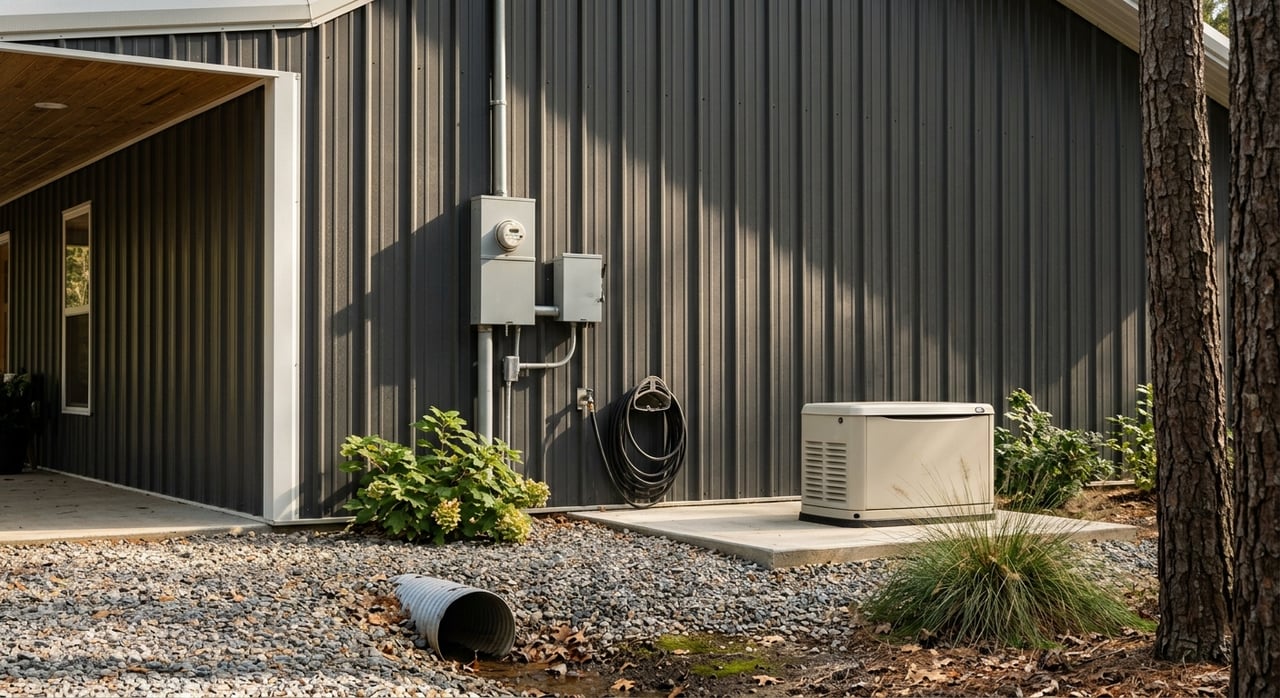
In rural Taylorville, the key issue is not simply whether water and sewer exist nearby. The real question is whether the specific property is connected, has the legal right to use those services, or depends on private systems that need separate verification.
The Alabama Department of Public Health notes that septic systems are commonly used where municipal sewer is unavailable or impractical. It also notes that many Alabama residents rely on private water supplies such as wells, so private systems are common and need careful review.
If city sewer is not available, ask the local health department whether the lot is suitable for onsite sewage disposal. ADPH advises buyers to check this before buying land because some lots are not suitable for conventional septic systems.
In some cases, soil testing may be needed, and an engineer may need to design an alternative system. Before construction of an onsite sewage disposal system begins, the owner must submit a permit application to the local county health department, and the installer should be licensed by the Alabama Onsite Wastewater Board.
If the property already has a septic system, you should ask for records early in the process. ADPH says owners or agents can request septic tank information from the local health department, and the permit or Approval for Use includes a diagram of the installed system.
That paperwork can help you understand system location and reduce guesswork before inspections, repairs, or future improvements. On land with shops, additions, or future building plans, that clarity can save time and money.
If the home uses a private well, water quality should be treated as a separate due diligence item. The Tuscaloosa County Health Department offers private well water testing services, and ADPH states that well owners are responsible for making sure their water is safe.
Routine testing is highly recommended. ADPH also notes that the county health department can collect the sample, there may be a collection or testing fee, and the sample should be collected using the container provided by the county health department.
Your loan program may add another layer of review. HUD’s FHA handbook says the mortgagee must confirm a continuing supply of safe, potable water, sanitary facilities, safe sewage disposal, and adequate electricity and heating.
FHA guidance also requires well-water testing in several situations, including new construction, reported deficiencies, unsafe water concerns, proximity to hazardous sites, or when a well is within 100 feet of a septic system. Testing must be done by a disinterested third party acceptable to the local health authority.
Flood concerns can look different on acreage than they do on a smaller in-town lot. FEMA’s Flood Map Service Center is the official public source for flood-hazard information, and Tuscaloosa County’s floodplain manager can help confirm whether a property falls within a flood zone.
This is important because flood risk is shown by location, not by city limits or simple assumptions. On a larger rural parcel, the house site, driveway, creek area, and outbuildings may all have different drainage conditions.
Do not stop at asking whether the home itself appears to be outside a mapped flood zone. You also want to understand how water moves across the land during heavy rain and whether access routes or future building areas are affected.
A property can function very differently in wet conditions than it does on a sunny showing day. This is one of the biggest reasons rural buyers should complete due diligence before removing contingencies.
With acreage homes, financing does not focus only on square footage and condition. The lender may also evaluate access, utilities, water supply, sewage disposal, and whether required easements are properly recorded.
For USDA financing, property eligibility should be checked for the specific property. For FHA buyers, access and utility conditions can affect underwriting, which means a parcel that seems workable at first glance may still need corrections, testing, or document updates before closing.
One of the smartest moves you can make is to involve your lender and inspector early. That gives you time to identify program-specific issues before appraisal or final underwriting.
This step fits Micah Hill’s no-pressure, no-surprises approach well. The goal is to surface property questions early, not after you have invested time, money, and emotional energy into the transaction.
If you are evaluating acreage or a rural home in Taylorville, this is a practical order to follow:
If questions come up during your due diligence, these Tuscaloosa County contacts are useful starting points:
Buying rural property can absolutely be worth it, but it works best when you go in with a clear process. If you want acreage in Taylorville, the right approach is to slow down, verify the details, and make sure the land supports the lifestyle and financing plan you have in mind.
That is where steady guidance matters. If you want help sorting through access, utility questions, and next steps for a rural property in Tuscaloosa County, reach out to Micah Hill for a clear, no-pressure game plan.
You’re no longer a home seeker or a home buyer.
Get assistance in determining current property value, crafting a competitive offer, writing and negotiating a contract, and much more. Contact me today.