Everyday Life In Central Tuscaloosa And Midtown
July 2, 2026
July 2, 2026
If you want to live close to the University of Alabama, downtown, shopping, and daily essentials, Central Tuscaloosa and Midtown can look appealing fast. The challenge is that this part of town is not one single neighborhood with one price point or one feel. If you are trying to figure out what everyday life here really looks like, this guide will help you understand the housing, commute patterns, shopping, and tradeoffs so you can decide what fits your goals. Let’s dive in.
Central Tuscaloosa is best understood as a corridor that runs from downtown toward the University of Alabama, not as one uniform neighborhood. City planning materials place areas like Forest Lake, Midtown Village, and the 15th Street and McFarland retail corridor in this central core.
That matters when you are home shopping. A condo near Midtown Village, a house in Forest Lake, and a property closer to the University area can offer very different daily routines, traffic patterns, and price expectations even though they are all part of the same broader area.
If you are looking for variety, this part of Tuscaloosa has it. The central corridor includes older single-family homes, attached housing, condo options, and more campus-oriented properties.
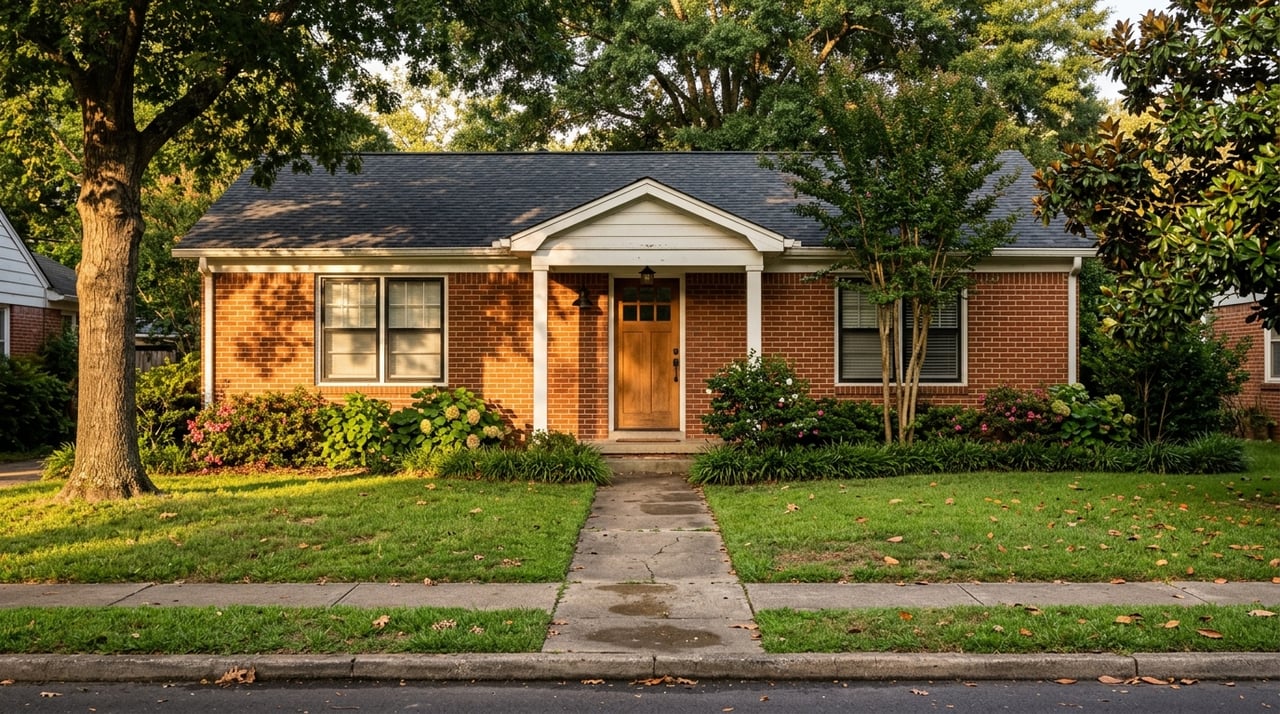
Forest Lake stands out as one of the clearest in-town residential pockets. City materials describe it as a predominantly single-family area with many homes built after World War II.
It also has a historically strong renter presence tied to student and UA-adjacent households. That means your block-by-block experience can vary, so it helps to look closely at the specific street and nearby property mix instead of relying on the neighborhood name alone.
Midtown Village adds a newer condo option to the central corridor. This can appeal to buyers who want lower-maintenance living and quick access to retail, dining, and major roads.
Available pricing in Midtown Village has recently ranged from the low $100,000s into the upper $200,000s, with current for-sale units around the mid-$200,000s to upper-$200,000s. That gives some buyers a more accessible entry point than areas closer to the campus core.
As you move closer to downtown and the University area, attached units and campus-oriented housing become more common. Prices can also rise quickly, especially in the University area.
Recent University Area sales included closings at $640,000, $835,000, and $1.49 million. That is a good reminder that Central Tuscaloosa is a multi-band market, not a one-size-fits-all price range.
Tuscaloosa citywide has a median owner-occupied home value of $255,500, a median gross rent of $1,055, and an owner-occupied rate of 42.9%. In the central corridor, recent neighborhood-level pricing shows how much values can change from one pocket to the next.
Here is a simple snapshot of recent median sale prices:
| Area | Recent Median Sale Price |
|---|---|
| Forest Lake | $249,000 |
| Downtown Tuscaloosa | $293,000 |
| University Area | $489,000 |
Days on market also vary by location. Forest Lake averaged about 40 days on market, Downtown Tuscaloosa about 48 days, and the University Area about 39 days in the recent periods reported.
For you as a buyer or seller, the takeaway is simple: pricing strategy needs to be block-specific and property-specific. Two homes with similar square footage can live in very different market bands depending on exactly where they sit in the corridor.
One of the biggest draws of Central Tuscaloosa and Midtown is convenience. If you value shorter drives and the ability to mix in walking or transit for some trips, this area has practical advantages.
Tuscaloosa’s mean travel time to work is 19.6 minutes. Downtown is also walkable by local standards. Visit Tuscaloosa describes University Boulevard as the city’s main street, and the walk from the Federal Courthouse to Capitol Park takes about 17 minutes.
For people who need campus access, Crimson Ride can be a real quality-of-life benefit. The University of Alabama’s transit system lists 16 campus routes and 10 apartment routes during the academic year.
There is also a Downtown and UA trolley that runs between the Downtown Intermodal Facility and campus every half hour on weekdays year-round. During the fall and spring semesters, the Shopping Center Route serves Midtown Village, University Mall, Target, and Aldi.
That setup can make everyday errands easier if you live in the right spot. Depending on where you buy, you may be able to handle campus trips, downtown appointments, and some shopping without long cross-town drives.
Midtown Village is the main retail anchor in this part of town. It is described as a one-stop shopping and dining destination, with stores and restaurants including Barnes & Noble, Best Buy, Nike Factory Store, Old Navy, LongHorn Steakhouse, and Panera Bread.
The broader 15th Street and McFarland corridor adds even more day-to-day convenience. For many buyers, that means less time spent driving across town for basics.
Dining options are another strong point. Near campus and downtown, you will find a dense mix of casual restaurants, cafes, and late-night spots.
Local highlights noted by Visit Tuscaloosa include Rama Jama’s, Buffalo Phil’s, Glory Bound Gyro Co., Thai Basil & Sushi II, DePalma’s, and The 205. If you like having plenty of meal options close by, this area gives you variety.
When you need outdoor time, the Riverwalk is one of the standout nearby amenities. It is a paved trail along the Black Warrior River near downtown that stretches about 4.5 miles and includes benches, gazebos, a playground, and a splash pad.
That gives central-area residents an easy option for a walk, a jog, or just getting outside without leaving town. It also adds to the everyday convenience factor that draws many buyers to this part of Tuscaloosa.
The area’s rhythm is also shaped by the University of Alabama. UA reported fall 2025 enrollment of 42,360 and an annual economic impact of $3.4 billion, which helps explain why the central core feels active through much of the year.
Central Tuscaloosa and Midtown tend to fit buyers who care more about location and convenience than large lots or a quieter outer-ring setting. If being close to campus, downtown, retail, and dining matters most, this corridor can make a lot of sense.
It can be especially attractive if you want:
Every location has tradeoffs, and this area is no exception. Central Tuscaloosa is generally more mixed and more active than many outer-ring neighborhoods.
City planning documents specifically note student housing concentrations and apartment-traffic concerns in parts of Forest Lake. That does not make the area good or bad. It simply means your experience can change quickly from one block to the next, so it is worth evaluating each property in context.
If you are comparing this area to other parts of Tuscaloosa, ask practical questions like:
The best approach here is to avoid broad assumptions. Instead of asking whether Central Tuscaloosa is right for you as a whole, narrow the question to specific pockets like Forest Lake, Midtown Village, downtown-adjacent blocks, or the University area.
That is usually how you get the clearest answer. With a block-specific search and realistic pricing expectations, you can match your budget and lifestyle to the part of the corridor that actually fits.
If you want clear, no-pressure guidance on where Central Tuscaloosa or Midtown fits into your home search, Micah Hill can help you compare options, understand the tradeoffs, and build a buying or selling game plan that makes sense for you.


Get assistance in determining current property value, crafting a competitive offer, writing and negotiating a contract, and much more. Contact me today.