Cottondale's Median Price Is Real. It Just Doesn't Describe Any House You'll Actually Tour.
August 27, 2026
August 27, 2026
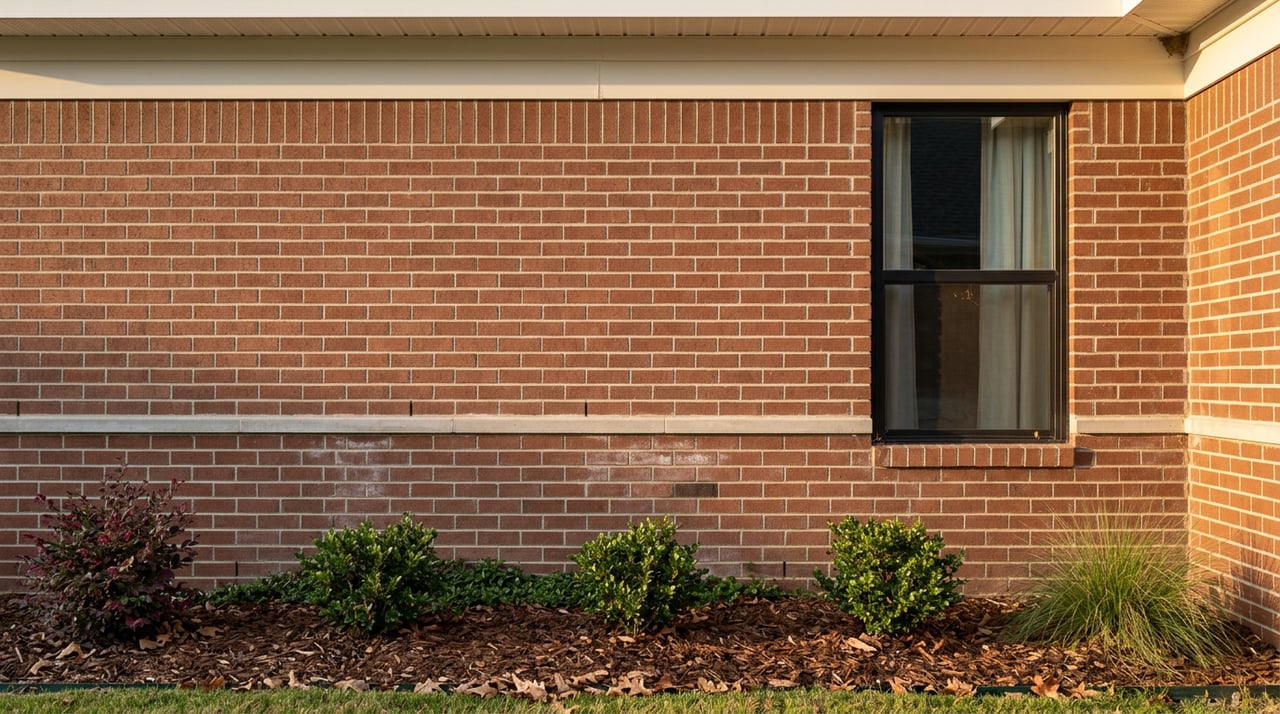
A buyer pre-approved for $260,000 spends a Saturday touring two houses in the same zip code. The first is a brick ranch on 15th Street East, built sometime in the 1960s, asking $164,900. The second is a garden home three miles away in the newer end of the Village at Huntland, asking $289,900 with granite counters and luxury vinyl plank throughout. Both are in Cottondale. Both show up under the same "35453" search. The buyer leaves confused about which one is the deal and which one is overpriced, because nothing on either listing explains why they're $125,000 apart.
They're not confused because they missed something. They're confused because Cottondale's median price is a real number that describes an average of two markets that don't actually compete with each other.
As of June 2026, Cottondale's median list price sat at $259,000, running about $169 per square foot, a figure that had actually ticked down about 1 percent from the year before. That's the number most buyers see first, and on its face it looks like a straightforward discount against the city of Tuscaloosa's March 2026 median sale price of $284,000 at $174 per square foot.
But active listings in the 35453 zip code that same month ranged from roughly $12,500 for small parcels and fixer-uppers up to $599,000 for larger new construction and acreage. A single median sitting in the middle of that spread doesn't tell you much about any specific house. It tells you where the average landed, not what you're buying.
Here's roughly how that spread breaks down by what's actually inside it:
| Price band | What's typically in it (based on August 2026 active listings) |
|---|---|
| Under $200,000 | Older brick ranches and garden homes, mostly built 1960s through 1990s, often on University Boulevard-adjacent streets |
| $200,000 to $300,000 | Renovated homes and newer subdivisions like the Village at Huntland and University Gardens, some built as recently as 2021-2022 |
| $300,000 and up | Larger new construction, acreage parcels, and lake-adjacent properties near communities like Mallard Lake |
These three bands don't behave like one market. A buyer shopping the entry band is usually comparing square footage and lot size against other 1960s-era stock. A buyer shopping the top band is comparing new-construction finishes and acreage against a completely different set of houses. The median splits the difference between groups that never actually bid against each other.
Part of why that top band exists at all traces back to a single employer. Mercedes-Benz U.S. International in Vance announced in March 2026 that it plans to invest $4 billion in its Tuscaloosa County plant by 2030, on top of an operation that already employs about 5,800 people and represents more than $7 billion in total investment. The company also confirmed its GLC SUV will join the Vance assembly lines in the coming years, on a plant that already exports roughly 60 percent of what it builds.
From Cottondale, that plant sits roughly 8 to 12 miles down I-20, a noticeably shorter run than the drive most buyers face coming from downtown Tuscaloosa or Northport. That distance is exactly why newer construction has been landing here rather than closer to the city core. A chunk of the demand pushing the top price band isn't chasing school zones or walkability. It's chasing a shorter drive to Vance, and it's willing to pay new-construction prices to get it.
That's a different buyer than the one shopping the entry-level brick ranches nearer University Boulevard, who's usually weighing Cottondale against renting in town rather than against a subdivision in Vance. Two buyer pools, two price bands, one zip code.
The clearest evidence that these are separate markets isn't the price spread. It's how long homes take to sell. In June 2026, Cottondale homes spent a median of 69 days on the market. That's actually down 9 percent from the year before, but it's still roughly double the 35 days homes were taking to sell in the city of Tuscaloosa as of March 2026.
That gap is the friction a buyer or seller actually feels during a transaction. When housing stock ranges from a decades-old ranch to a 2022 brick build to acreage with a manufactured home on it, an appraiser has a harder job finding three or four truly comparable recent sales. Fewer clean comps means more back-and-forth on price, more time for both sides to agree on value, and more risk that an appraisal comes in under contract price if the comps an appraiser pulls skew toward the wrong band.
If you're selling a renovated 1990s home in the $220,000 range, the worst thing that can happen is having your file compared against either the $150,000 fixer-uppers or the $350,000 new builds nearby, because neither one is your real comp. Knowing which band your house actually belongs to, and pointing that out clearly when you list, is what keeps that 69-day median from becoming your personal timeline.
There's one asset in Cottondale that doesn't correlate with price at all, and it's worth understanding because it's easy to miss on a portal listing. Hurricane Creek Park sits just east of Cottondale on Highway 216, a 249-acre park managed by the Tuscaloosa County Park & Recreation Authority with six trails ranging from easy family loops to genuinely technical hiking, including the 5.8-mile Hurricane Creek Perimeter trail and the shorter Approach Trail and North Loop.
What makes it unusual isn't just the trail mileage. The creek itself marks the boundary between the Appalachian Plateau and the Gulf Coastal Plain, meaning a hiker can cross from Pennsylvanian-era sandstone into Coastal Plain sediment within the same afternoon. The county's own park authority has documented the area's history going back to a 1906 observation by botanist Roland Harper, who noted Tuscaloosa as one of the most convenient places in the eastern United States to study that exact geological boundary. The area also carries a mining history, with old coal seams and 19th-century "belly mines" once dug into the bluffs along the creek before the county sealed most of the entrances after the Summerfield Subdivision went up in the 1970s.
None of that history or acreage shows up in a price-per-square-foot figure. A buyer in the $150,000 band and a buyer in the $350,000 band are equally close to it. It's the one part of Cottondale that isn't segmented by price band at all, which makes it worth a visit before you decide which part of the zip code actually fits what you're looking for.
If you're comparing Cottondale to the rest of Tuscaloosa County using the median price alone, you're comparing against a number that blends two different products. Before you make an offer, or price a listing, it's worth asking which band your specific house sits in and who else is actually shopping that band. A commuter buyer chasing the Vance drive time is not competing against someone comparing entry-level ranches near University Boulevard, even though both might show up in the same market report.
It's also worth building in more patience than you'd expect from a countywide median. A 69-day timeline isn't a red flag in Cottondale. It's closer to how this particular market actually moves, given how varied the housing stock is street to street.
If you're trying to figure out which band makes sense for your budget, your commute, or your timeline, that's exactly the kind of conversation worth having before you write an offer or set a list price. Micah Hill works this market daily and can walk through the comps that actually apply to your situation, not the ones a countywide average would suggest. Reach out for a no-pressure home value and buying or selling game plan built around the numbers that actually apply to your street.

Get assistance in determining current property value, crafting a competitive offer, writing and negotiating a contract, and much more. Contact me today.